The Receptor That Burns: How Capsaicin Hacks Your Nervous System
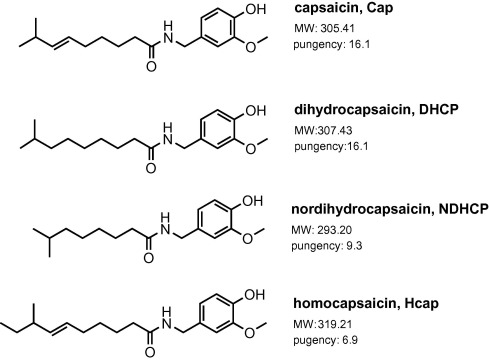
Capsaicin doesn’t actually burn anything. There’s no heat generated in your mouth when you eat a hot pepper. No chemical reaction damaging the tissue. No combustion of any kind. What’s happening is a hack — capsaicin binds to one specific protein on your nerve cells, opens a channel that’s supposed to stay closed at body temperature, and lies to your brain about what’s happening.
The protein is called TRPV1 — Transient Receptor Potential Vanilloid 1. It’s an ion channel embedded in the membrane of pain-sensing neurons throughout your mouth, gut, skin, and a few other places. Its evolved job is to detect actual heat, around 109°F (43°C) and higher, and send an urgent signal to the brain that translates to "you’re burning, get away from whatever is happening."
When capsaicin molecules find TRPV1, they bind to it and force it open at normal body temperature. Calcium and sodium ions flood into the neuron. The neuron fires. The signal travels up the spinal cord to the brain, and the brain interprets it exactly the way it interprets actual burning — because at the neural level, there is no difference.
This one mechanism explains nearly everything weird about hot sauce.
Why milk works and water doesn’t
Capsaicin is fat-soluble, not water-soluble. Water sloshes it around your mouth without removing it. The casein protein in milk — and the fat in whole milk, sour cream, yogurt, and cheese — physically binds to capsaicin and pulls it off the TRPV1 receptors. The receptors stop firing. The pain stops.
This is why every culture that eats peppers regularly developed a dairy or fat-based companion. India has lassi and ghee. Mexico has crema. Texas has milk on the table. The pattern isn’t coincidental.
Why beer doesn’t help much
Same reason. Alcohol partially dissolves capsaicin, but most beer is too dilute to do meaningful work. A neat shot of high-proof spirits is more effective. Heavy cream cocktails are better still. Light beer with a Reaper sauce is pain followed by more pain.
Why bread and rice take the edge off
Starches don’t bind capsaicin chemically. They absorb it physically — the same way bread soaks up oil. You’re not neutralizing the compound, you’re moving it from your nerve receptors to your stomach, where TRPV1 receptors also exist but are far less densely concentrated.
Why chiliheads aren’t faking it
Repeated exposure to capsaicin causes TRPV1 receptors to desensitize. They down-regulate. Over time, the neurons that fire in response to capsaicin become less responsive — not because the person has more willpower, but because the underlying biology has shifted. After a few weeks without peppers, the receptors resensitize and your tolerance resets. This is also why capsaicin creams are used medically for arthritis and neuropathy pain: after enough topical exposure, the affected nerves stop firing for all signals, including the actual underlying pain the cream was prescribed for.
What this means for sauce makers
Capsaicin extracts best in oil and alcohol, not water. The heat profile of a vinegar-based sauce will be different from an oil-based or alcohol-extracted version of the same pepper, even if the SHU on paper is identical. Vinegar-based sauces deliver a sharper, faster, more surface-level burn. Oil-based sauces deliver a slower, deeper, longer burn — because the capsaicin is more thoroughly dissolved and stays in contact with TRPV1 receptors longer.
The mash-aging process used by craft makers also matters here. Long fermentation in salt creates capsaicin micro-emulsions that distribute the compound more evenly through the finished sauce. That’s part of why a well-aged mash sauce delivers heat that feels different from a fresh-blended one at the same Scoville rating.
The bigger point
The "heat" of hot sauce is a sustained controlled lie your nervous system is telling itself, and the people who love hot sauce have learned to enjoy the lie. The endorphin response to repeated TRPV1 firing — the runner’s-high element of eating peppers — is what hooks chiliheads in the first place. It’s also why hot sauce eating is one of the few pain-seeking behaviors that no one tries to treat as a disorder. The lie is, on balance, fun.
Capsaicin doesn’t burn anything. But the brain doesn’t care. And that’s the whole thing.